
5 Signs You’ve Outgrown Your Current HomeBuying a home that fits your life today is one thing. Finding a home that continues to fit your life five or ten years later is another.Families grow.

Dated: August 26 2024
Views: 363
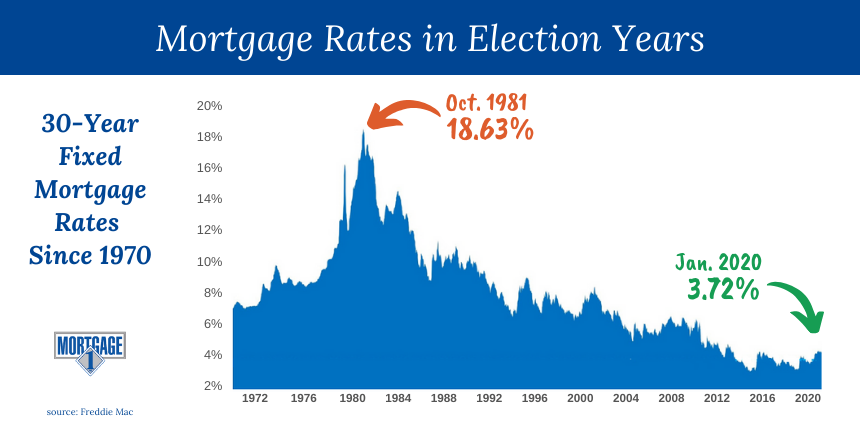
Elections have long been a significant influence on the U.S. economy, and one area where this influence is especially noticeable is in mortgage interest rates. The period following an election often brings economic uncertainty, shifts in fiscal and monetary policy, and changes in consumer confidence—all of which can impact the housing market and mortgage rates. This blog will explore how mortgage interest rates have historically responded after elections and what factors typically drive these changes.
The Relationship Between Elections and Mortgage Interest Rates
Mortgage interest rates are influenced by a complex interplay of factors, including the Federal Reserve's monetary policy, inflation expectations, economic growth, and investor sentiment. Elections can act as a catalyst for changes in these factors, leading to fluctuations in mortgage rates.
1. Pre-Election Uncertainty and Post-Election Stabilization
Before an election, uncertainty often prevails. Investors, businesses, and consumers may hold off on major decisions until the election outcome is clear. This "wait-and-see" approach can cause economic activity to slow and interest rates to remain stable or even decline as demand for safe assets like U.S. Treasury bonds increases.
After the election, once the political landscape is more certain, there is often a period of stabilization. If the market perceives the election results as favorable to economic growth, mortgage interest rates may rise as investors shift their focus to higher-risk, higher-return investments. Conversely, if the election results are seen as unfavorable or if they lead to policy uncertainty, rates may stay low or even decrease further.
2. Federal Reserve's Role
The Federal Reserve plays a crucial role in determining mortgage interest rates, especially in the period following an election. The Fed's actions are often influenced by the new administration's policies. For example, if the incoming administration is expected to increase government spending or cut taxes, the Fed might raise interest rates to prevent the economy from overheating. This, in turn, can lead to higher mortgage rates.
Historically, after the 2008 election, the Federal Reserve kept interest rates near zero to support the economy during the Great Recession. This led to some of the lowest mortgage rates in history. In contrast, after the 2016 election, the Fed increased rates several times in response to anticipated fiscal stimulus under the new administration, leading to a gradual rise in mortgage rates.
3. Economic Policies and Market Reactions
Different administrations prioritize different economic policies, which can directly impact mortgage interest rates. For instance, a government focused on reducing deficits might lead to higher rates as borrowing costs increase. On the other hand, an administration that prioritizes stimulating economic growth through infrastructure spending or tax cuts could lead to inflationary pressures, prompting the Fed to raise rates.
The post-2020 election period saw the continuation of low mortgage rates due to the Federal Reserve's commitment to supporting the economy during the COVID-19 pandemic. However, the expectation of increased government spending and potential inflation under the new administration led to a gradual rise in rates as the economy began to recover.
Historical Trends After Major Elections
- 1980s: After Ronald Reagan's election in 1980, mortgage rates remained high due to the Federal Reserve's aggressive stance on controlling inflation. Rates gradually declined as inflation was brought under control, but it took several years for mortgage rates to reach more manageable levels.
- 2000s: Following George W. Bush's election in 2000, the dot-com bubble burst, and the Federal Reserve cut rates to stimulate the economy, leading to lower mortgage rates. However, after his re-election in 2004, rates began to rise as the economy recovered.
- 2010s: The aftermath of the 2012 election saw mortgage rates remain relatively stable, as the Federal Reserve maintained a low-rate environment to support the ongoing recovery from the Great Recession. The 2016 election led to a shift in policy expectations, with rates rising in anticipation of fiscal stimulus and tax cuts under the new administration.
What to Expect in Future Elections
While past trends offer valuable insights, predicting mortgage interest rates after future elections remains challenging due to the unique circumstances surrounding each election. Factors such as the global economic environment, unexpected crises, and the specific policies of the winning candidate can all influence the direction of mortgage rates.
However, understanding the historical relationship between elections and mortgage interest rates can help potential homebuyers and homeowners make more informed decisions. By keeping an eye on the Federal Reserve's actions, market sentiment, and the new administration's policies, you can better anticipate how mortgage rates might respond in the aftermath of an election.
Conclusion
Elections are a pivotal moment in the U.S. economy, and their impact on mortgage interest rates can be significant. While the exact outcome depends on a variety of factors, history shows that post-election periods often bring changes in interest rates driven by shifts in policy, investor sentiment, and the broader economic environment. By staying informed and understanding these dynamics, you can navigate the housing market more effectively in the wake of an election.

I grew up in a smaller town of about 10,000 people in Fulton, Missouri. After graduating high school and leaving Fulton, I then ventured to both Central Methodist University and the University Of Cent....
5 Signs You’ve Outgrown Your Current HomeBuying a home that fits your life today is one thing. Finding a home that continues to fit your life five or ten years later is another.Families grow.
Jackson & Johnson County Housing Market Update: What the Latest 2026 Numbers Tell UsIf you've been waiting for home prices to fall significantly in the Kansas City area, the latest numbers aren
Real Is Acquiring RE/MAX: What It Could Mean for the Future of Both BrokeragesThe real estate industry is changing quickly, and one of the biggest announcements of 2026 could reshape two very
Waiting for the "Perfect Time" to Buy a Home Cost Many Buyers More Than They ExpectedI remember the conversations like they were yesterday.In 2022, mortgage rates climbed into the 6% range, and many
 The information displayed on this page is confidential, proprietary, and copyrighted information of Heartland Multiple Listing Service, Inc. (
Heartland MLS
). Copyright 2026, Heartland Multiple Listing Service, Inc. Heartland MLS and Austin Moore Group do not make any warranty or representation concerning the timeliness or accuracy of the information displayed herein. In consideration for the receipt of the information on this page, the recipient agrees to use the information solely for the private noncommercial purpose of identifying a property in which the recipient has a good faith interest in acquiring. Data last updated on September 9, 2026 9:16 PM UTC
33. Required DMCA Notice
The Digital Millennium Copyright Act of 1998, 17 U.S.C. §512, the DMCA, provides recourse for copyright owners who believe that material appearing on the Internet infringes their rights under U.S. copyright law. If you believe in good faith that any content or material made available in connection with our website or services infringes your copyright, you (or your agent) may send us a notice requesting that the content or material be removed, or access to it blocked. Notices must be sent in writing by email to DMCAnotice@MLSGrid.com. The DMCA requires that your notice of alleged copyright infringement include the following information: (1) description of the copyrighted work that is the subject of claimed infringement; (2) description of the alleged infringing content and information sufficient to permit us to locate the content; (3) contact information for you, including your address, telephone number and email address; (4) a statement by you that you have a good faith belief that the content in the manner complained of is not authorized by the copyright owner, or its agent, or by the operation of any law; (5) a statement by you, signed under penalty of perjury, that the information in the notification is accurate and that you have the authority to enforce the copyrights that are claimed to be infringed; and (6) a physical or electronic signature of the copyright owner or a person authorized to act on the copyright owners behalf. Failure to include all of the above information may result in the delay of the processing of your complaint.
 All information deemed reliable but not guaranteed. All properties are subject to prior sale, change or withdrawal. Neither listing broker(s) or information provider(s) shall be responsible for any typographical errors, misinformation, misprints and shall be held totally harmless. Listing(s) information is provided for consumer's personal, non-commercial use and may not be used for any purpose other than to identify prospective properties consumers may be interested in purchasing. The data relating
to real estate for sale on this website comes in part from the Internet Data Exchange program of the Multiple Listing Service. Real estate listings held by brokerage firms other than Austin Moore Group may be marked with the Internet Data Exchange logo and detailed information about those properties will include the name of the listing broker(s) when required by the MLS. Copyright ©2026 All rights reserved.
Last Updated: September 9, 2026 9:38 PM UTC
Show More...
All information deemed reliable but not guaranteed. All properties are subject to prior sale, change or withdrawal. Neither listing broker(s) or information provider(s) shall be responsible for any typographical errors, misinformation, misprints and shall be held totally harmless. Listing(s) information is provided for consumer's personal, non-commercial use and may not be used for any purpose other than to identify prospective properties consumers may be interested in purchasing. The data relating
to real estate for sale on this website comes in part from the Internet Data Exchange program of the Multiple Listing Service. Real estate listings held by brokerage firms other than Austin Moore Group may be marked with the Internet Data Exchange logo and detailed information about those properties will include the name of the listing broker(s) when required by the MLS. Copyright ©2026 All rights reserved.
Last Updated: September 9, 2026 9:38 PM UTC
Show More...
